




Wood gives up moisture to dry air and shrinks as it does, almost entirely across the grain. Once furnaces start running in October, indoor humidity in Front Range homes drops quickly, and cabinet doors, face frames and trim respond within weeks. Most of what shows up is cosmetic and seasonal.
| What you see | Usually seasonal? | First step |
|---|---|---|
| Hairline at a painted door corner | Yes | Leave it through winter |
| Bare or light strip at a panel edge | Yes | Touch up the edge in a humid month |
| Door corner standing off the box | Often | Check with a straightedge, then wait a season |
| Uneven gaps between doors | Often | Tighten and adjust the hinges |
| Cabinet pulled away from the wall | No | Have the installation checked |
Painted doors and joints
Why is there a thin line where my door frame pieces meet?
It's the paint film breaking at a joint, and it's normal on painted five-piece wood doors.
A five-piece door has two vertical stiles and two horizontal rails around a center panel, so at each corner the grain runs at right angles. When the air dries out, the rail shrinks across its width while the stile barely changes in length. Paint is a continuous film over a joint that can't stay perfectly flush, so it breaks in a straight hairline along the seam.
The joint itself is glued and sound. The line usually tightens up in the humid months and may come back next winter.
Should I fill or caulk the crack?
Not in winter.
Filler or caulk put in at the driest point of the year gets squeezed out or cracks again when the wood swells in summer. If the line bothers you, touch it up with matching paint in the warmer months when the joint is tightest, and expect it to reappear when the heat comes back on.
Don't glue the panel
Whatever you touch up, keep paint, glue and caulk out of the gap between the center panel and the frame. The panel has to float. Lock it in place and the next big humidity swing can split the panel or crack the frame.
Why is there a bare strip along the edge of the center panel?
The panel shrank and exposed wood that never got finish.
The center panel floats in grooves in the frame so it can move without splitting the door. If the door was finished after assembly, the part of the panel hidden in the groove may be raw. When the panel shrinks, that strip comes into view: a light line on stained doors, a break in the paint on painted ones.
Good door makers finish panels before assembly to prevent this. On existing doors, a small brush and matching finish on the exposed edge is a reasonable fix, as long as you keep it off the frame.
Doors that look warped or out of line
Is my door warped?
Maybe slightly, and maybe only for the season.
A door bows when one face loses moisture faster than the other. Doors next to a heat register or range take the brunt of it, and tall pantry doors show it most because a small curve over more height leaves a bigger gap at the corner.
Close the door and see whether one corner stands off the box, then lay a straightedge diagonally across the face. Compare against the flatness tolerance your cabinet maker publishes before calling a door defective. If it's borderline, wait a full season. A door that flattens out in summer is reacting to the house, and a replacement of the same material would likely do the same.
Why don't my doors line up anymore?
The wood moved a little, or hinge screws worked loose in dry wood.
Tighten the hinge mounting screws first. Concealed hinges have their own screws for side, height and depth adjustment, and a small turn often brings a pair back even. If a mounting screw spins without tightening, the hole is stripped and needs repair before the hinge will hold.
Gaps around the cabinets
There's a gap at the wall, or the caulk line cracked. Is that a problem?
Usually not.
Trim shrinks across its width too, so miters on crown and light rail can open, and caulk along the wall can split as drywall and framing move by different amounts. Push gently on the cabinet. If it's solid against the wall, the gap is in the trim or caulk and can wait for spring.
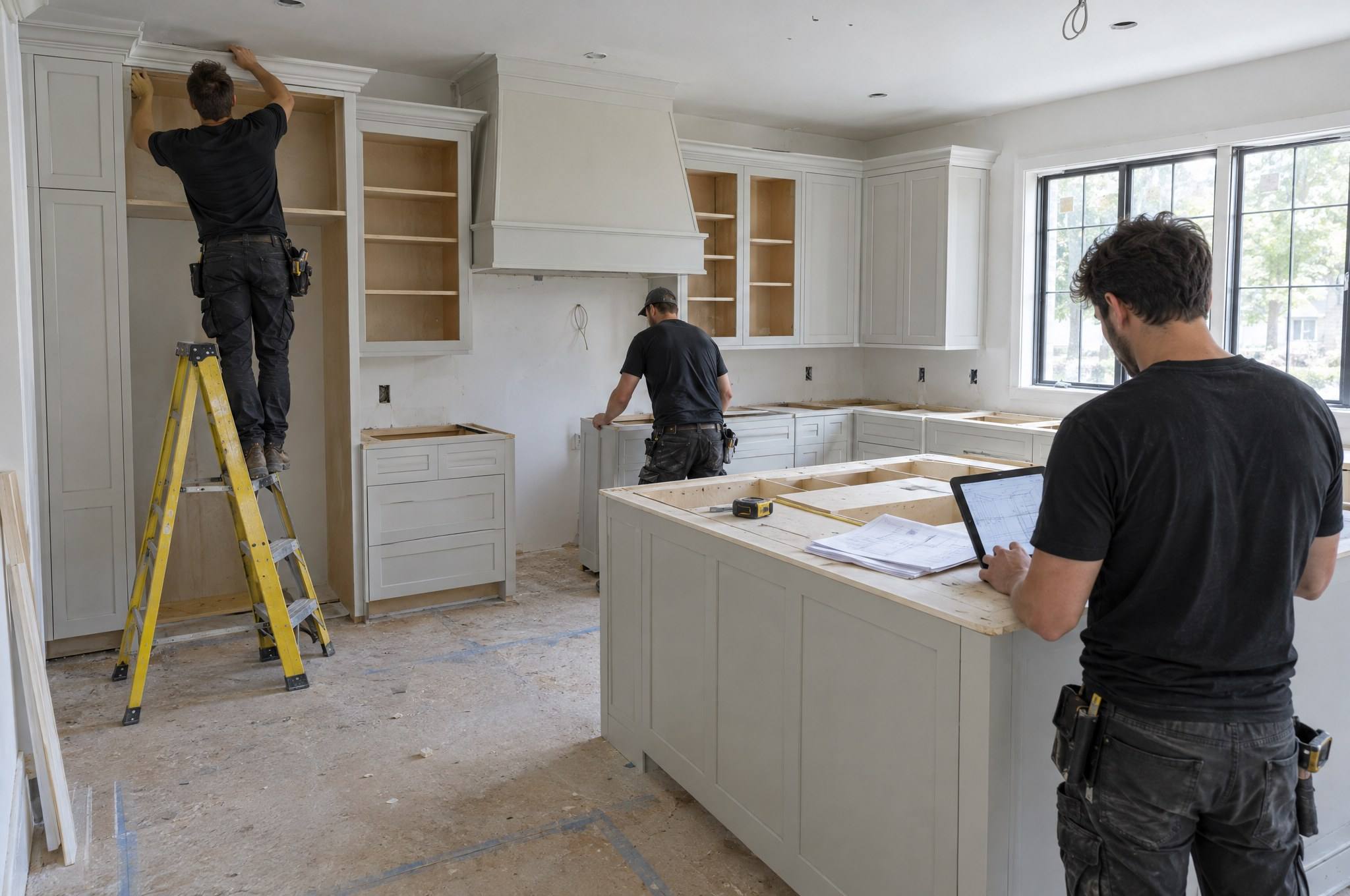
If a box has shifted, pulled away from the wall or gone out of level, that isn't humidity. It points to fastening or support, and it's worth having a professional who does cabinet installation look at how the boxes are secured.
Keeping movement in check this winter
What humidity should I keep the house at?
Use the range in your cabinet maker's care guide, and find out where your house actually sits.
Steady conditions matter more than hitting one number, and Front Range homes with the furnace running can drop well below what most cabinet makers recommend.
- Put an inexpensive hygrometer in the kitchen and check it through the first few weeks of heating season.
- If readings stay low, a humidifier helps. Whole-house units tied to the furnace are installed by HVAC contractors.
- Keep portable humidifier mist off cabinet faces. Wet surfaces swell unevenly and the finish can suffer.
- Use a register deflector if a floor vent blows straight at a cabinet door or toe kick.
Choosing new cabinets for a dry climate
Which door construction holds up best here if I want paint?
For painted cabinets in a Front Range house, we'd choose a one-piece MDF door, or MDF center panels in a wood frame.
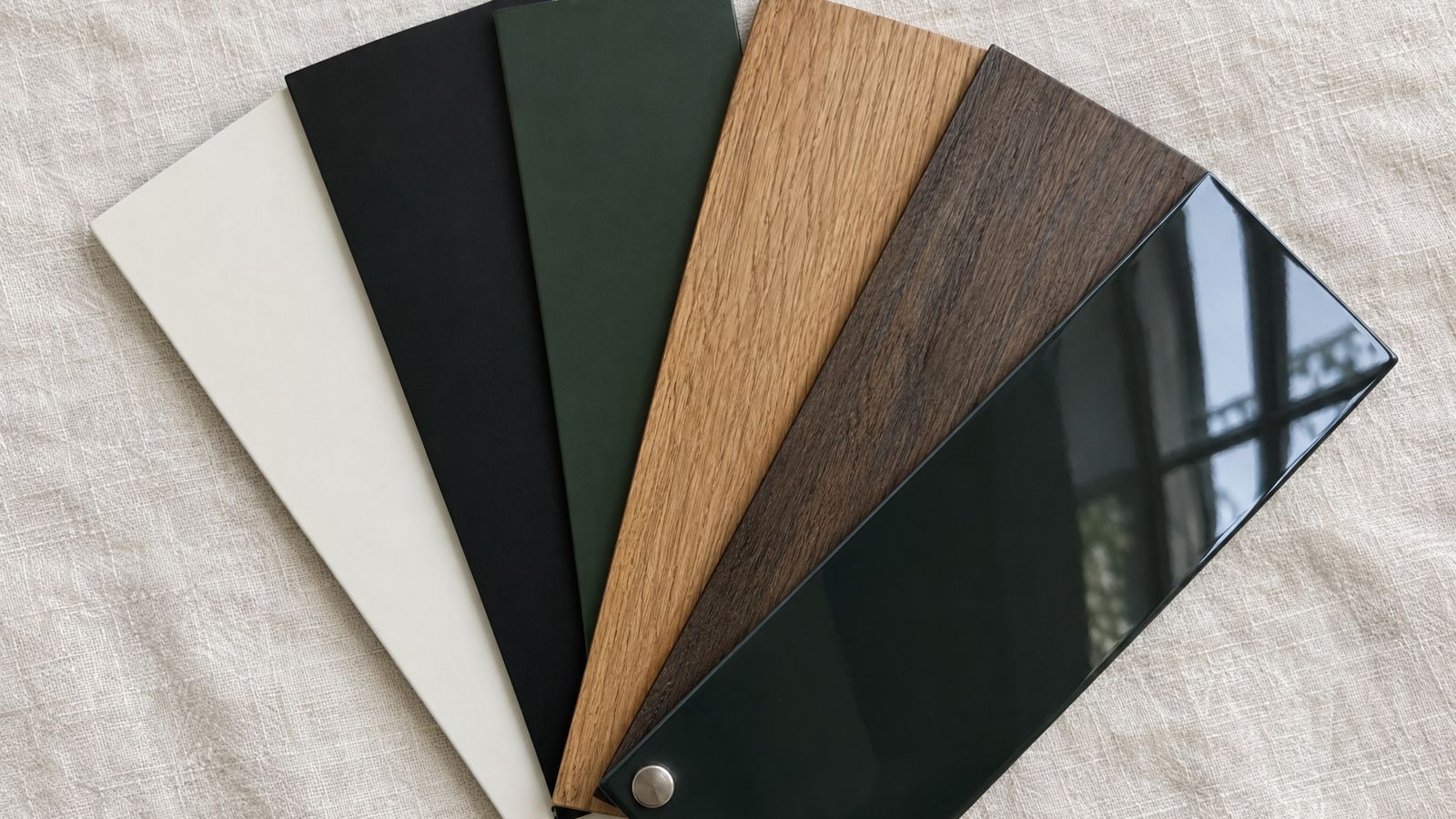
MDF has no grain and moves very little with humidity. A one-piece MDF door machined to look like a five-piece door has no frame joints, so no joint lines in the paint. A wood frame around an MDF panel will still show corner hairlines, but the panel won't shrink away from the frame. The trade-off is water: MDF swells if moisture reaches an unsealed edge, so the finish has to stay intact near sinks and dishwashers. For stained wood, we'd pick a five-piece door whose panel was finished before assembly. If you're planning new kitchen cabinetry, settle door construction early along with the finish.
Do new cabinets need to sit before they go in?
Yes. Cabinets should acclimate inside the house with the heat or air conditioning running at normal living conditions. In new construction, drywall mud, paint and wood flooring release a lot of moisture, and installing into a damp house right before the furnace kicks on sets up a big swing in the first winter. Let the house dry out first. You can describe your schedule on the request a quote form and plan installation around it.