Most stock shelving is designed for dishes and paperbacks. Put a small bronze mid-span on a wide adjustable shelf and the center starts to dip, especially in particleboard on four pins. Sag isn't only cosmetic. It tips the piece toward the front edge.
We size display shelving to the heaviest object you plan to put on it, not the average one. That decides the material, the span and how the shelf is held up. For the true heavyweights we stop pretending a shelf is the answer and build a pedestal or reinforced base cabinet that carries the load to the floor. Our custom built-ins start with that list of objects.
Shelves that hold their line
Shorter spans. Thicker shelves with plywood or solid wood cores, and a hardwood edge on the front, where the eye catches sag first. Fixed shelves set into grooves in the case sides carry more than shelves on pins. If you want adjustability, metal standards screwed to the sides spread the load better than a row of drilled holes.
Lighting drawn in before the boxes are built
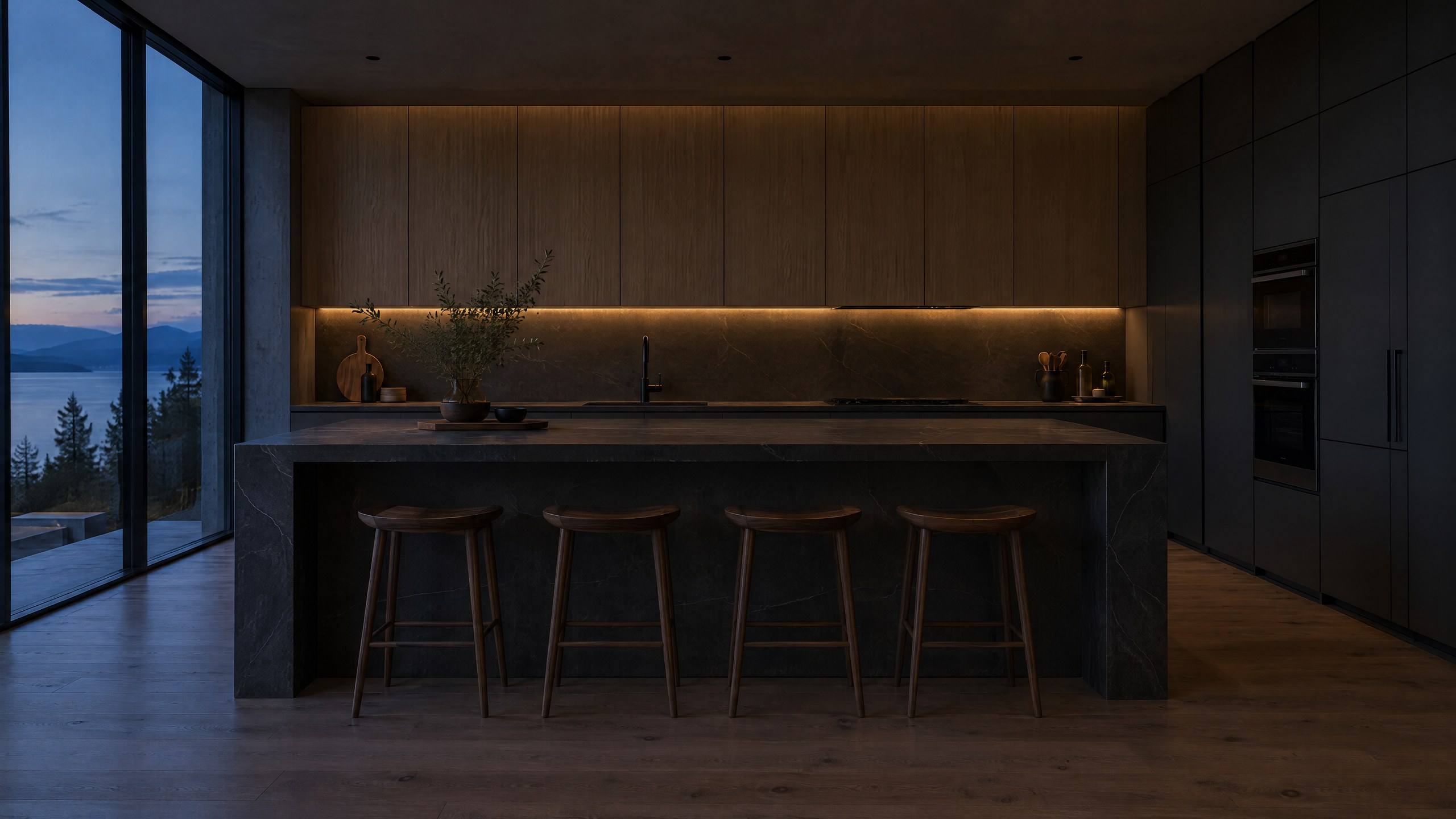
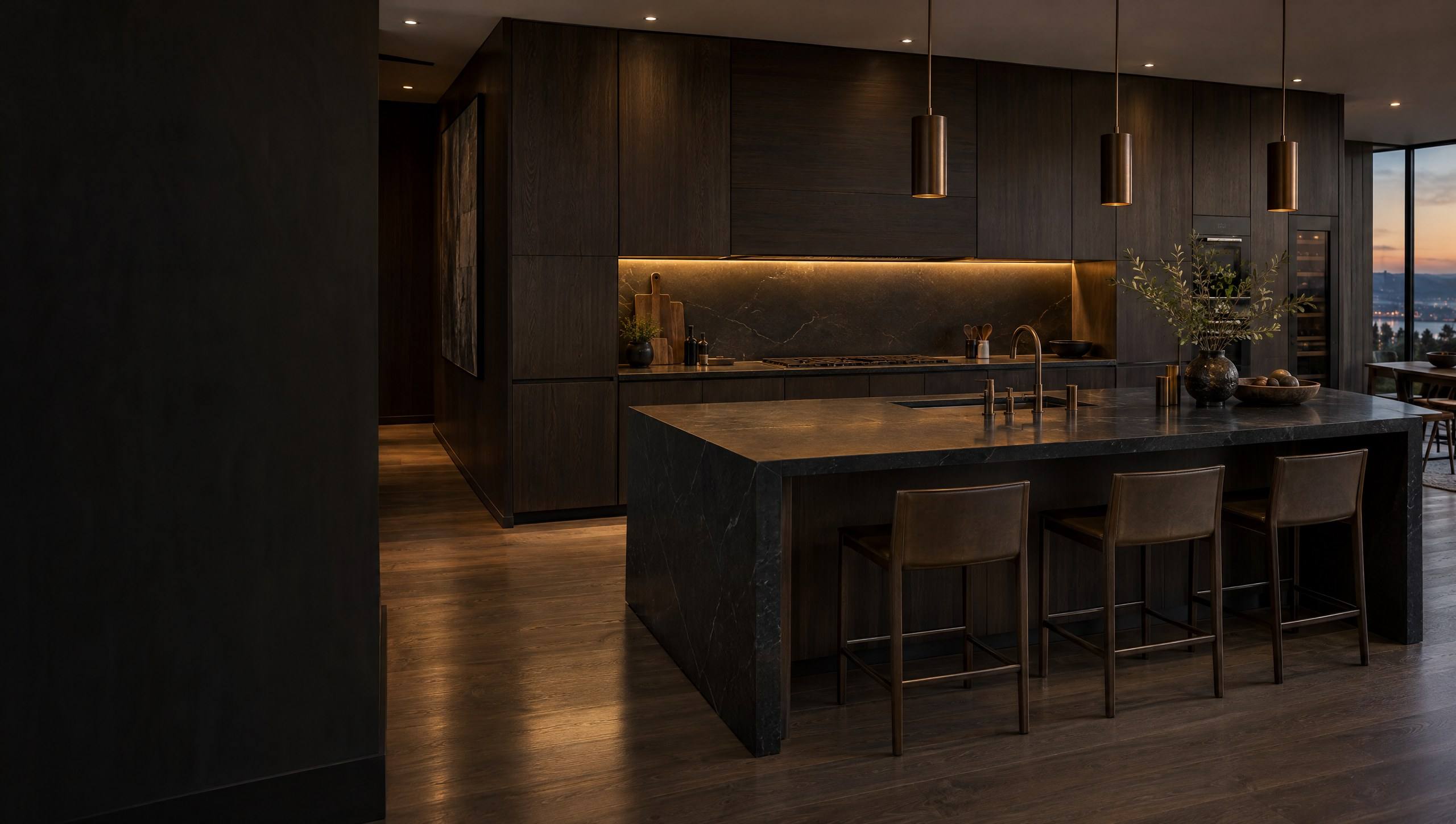
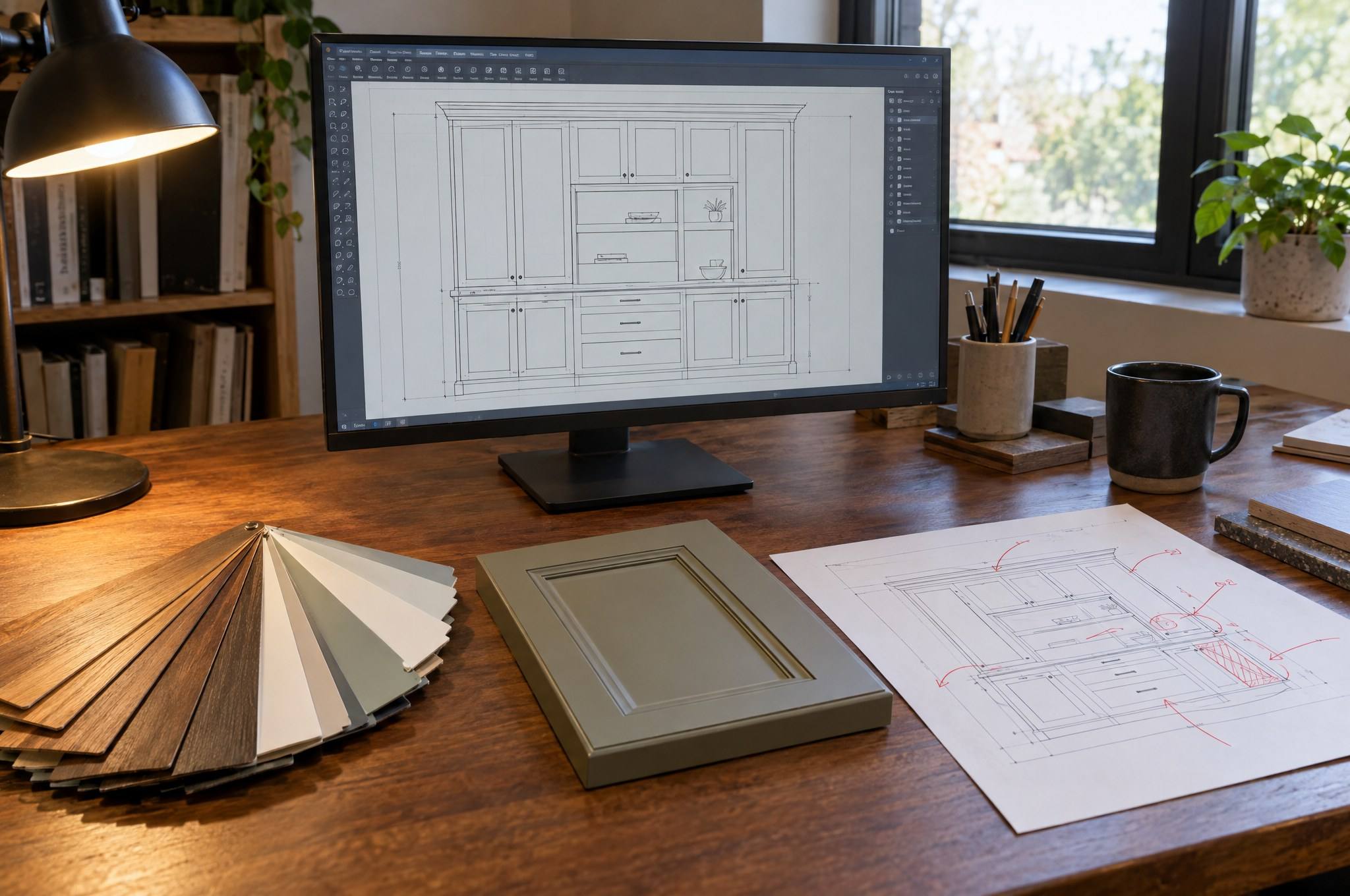
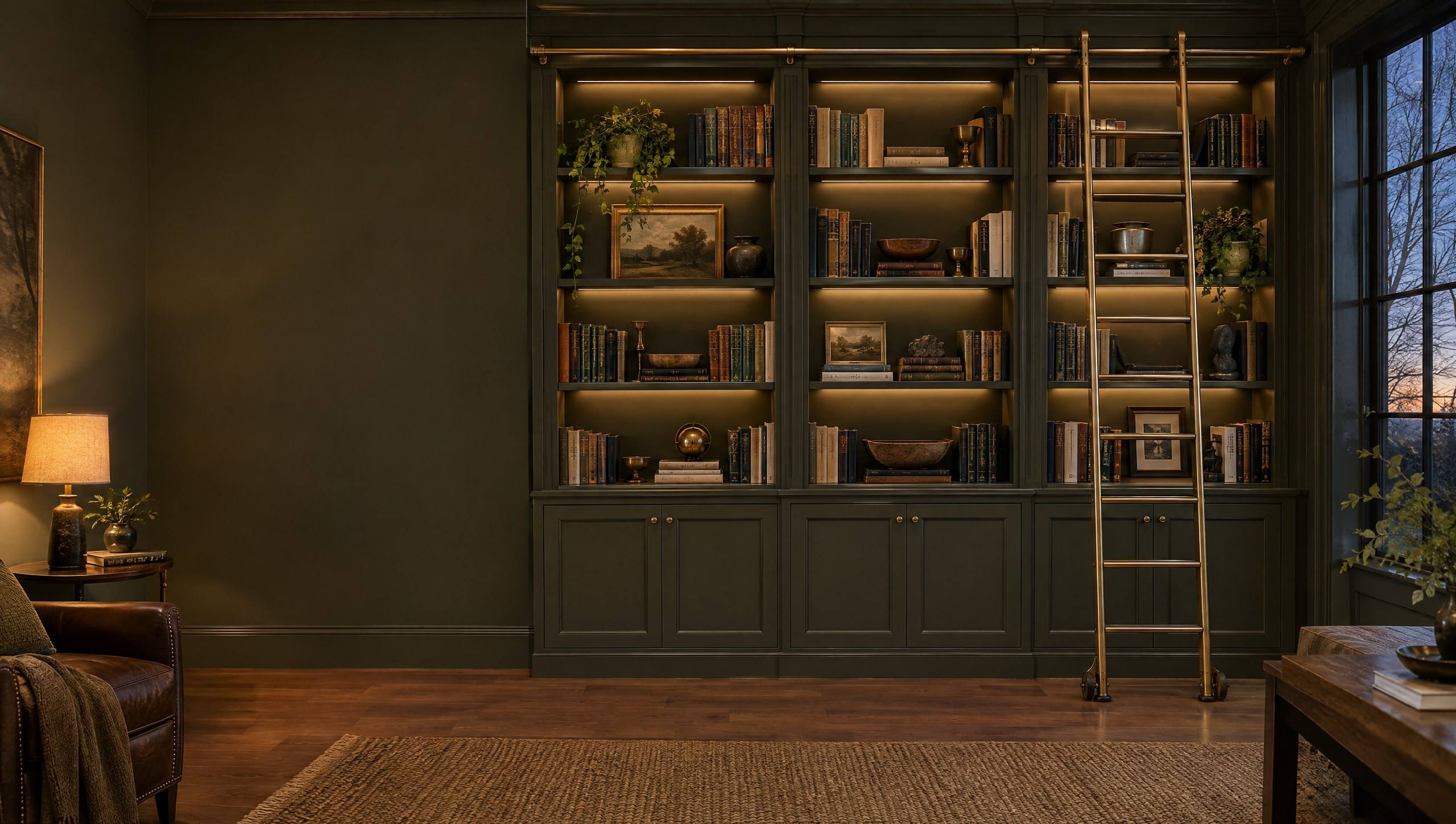
LED strips and puck lights run cool, but their drivers need a ventilated spot you can reach, and wire runs need channels cut into the case before assembly. We put every light, switch and driver on the drawings. Glass shelves pass light down a stack; solid shelves need a light at each level. Color temperature changes how a patina reads, so test with your own pieces.